
Ainu Patterns and Contemporary Design: Why an Indigenous Visual Language Feels So Modern
In recent years, designers around the world have been rediscovering Indigenous visual cultures—not as trends, but as sophisticated design systems. Among them, the traditional patterns of the Ainu people of northern Japan stand out for their striking modernity.
At first glance, Ainu motifs look surprisingly contemporary. Spirals, sharp geometric edges, rhythmic symmetry—these are elements you might expect to see in branding systems or digital interfaces. Yet their origins are centuries old.
So why do Ainu patterns feel so relevant today?
More Than Decoration: The Meaning Behind the Motifs
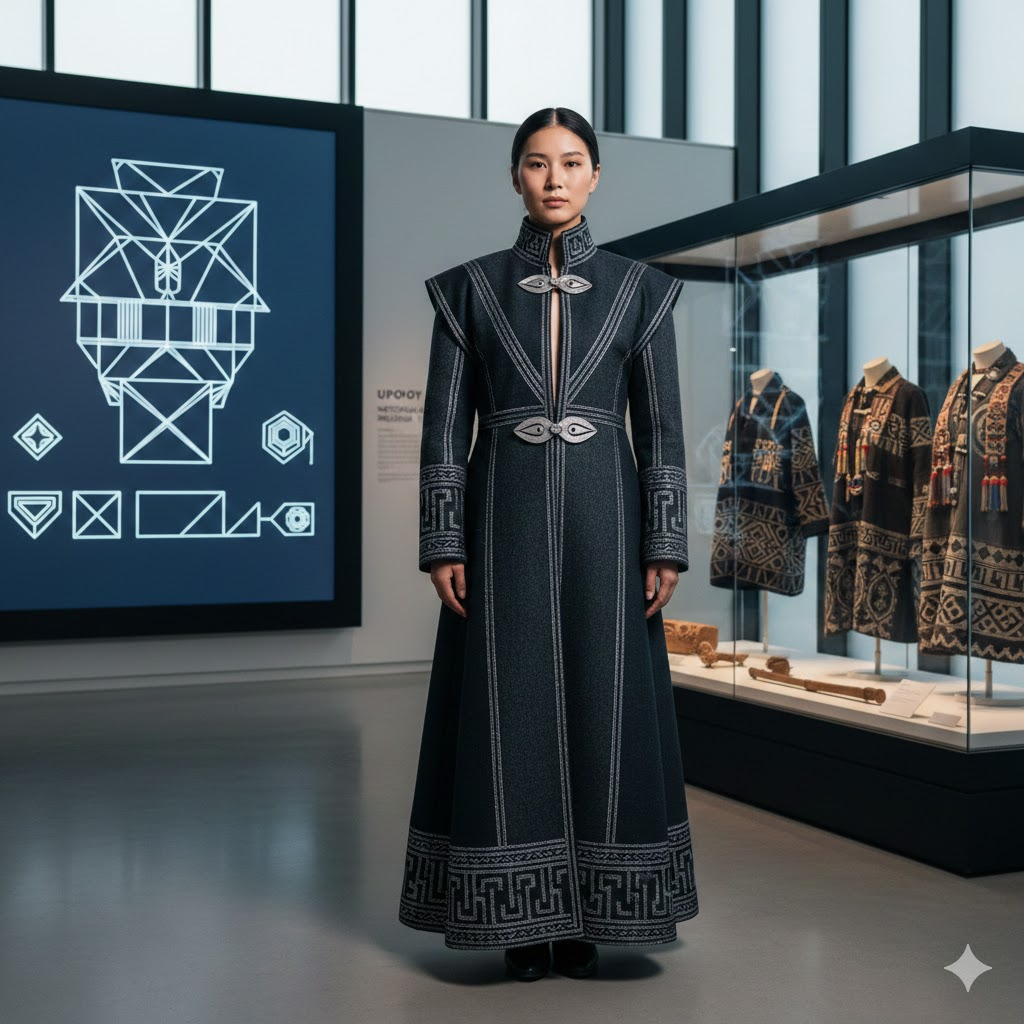
Traditionally, Ainu designs were applied to clothing, tools, and ceremonial objects. They were not purely aesthetic. They carried spiritual and protective meanings.
Some recurring motifs include:
- Moreu – spiral shapes symbolizing energy and continuity
- Aiushi – thorn-like patterns believed to ward off evil
- Eye-like shapes and flowing wave structures marking boundaries
Patterns were often placed at openings—such as sleeves or collars—acting as spiritual protection points. Design, in Ainu culture, was functional, symbolic, and deeply integrated into daily life.
This integration of meaning and form is precisely what resonates with contemporary designers.
Why Ainu Patterns Feel Contemporary
Ainu visual language shares several structural qualities with modern design systems:
- Repetition and modular construction
- Symmetry and balance
- Strong contrast
- Clear negative space
These characteristics translate easily into:
- Graphic design
- Textile and fashion
- Brand identity systems
- Digital UI pattern frameworks
In an era dominated by minimalism and grid-based systems, Ainu patterns demonstrate that structured geometry can coexist with expressive symbolism.
Nature as Design Philosophy
Beyond visual similarities, there is also philosophical overlap.
Artists like Isamu Noguchi, who designed Moerenuma Park in Hokkaido, emphasized harmony between landscape and human intervention. While Noguchi did not replicate Ainu motifs, the shared principle is notable: design should emerge from its environment.
Ainu craft traditions were inherently ecological. Materials were sourced locally. Patterns reflected worldview and relationship with nature. This holistic design philosophy aligns strongly with today’s sustainability-driven approach.
Revival and Reinterpretation
The opening of Upopoy National Ainu Museum and Park marked a significant milestone in cultural recognition and revitalization. Exhibitions there demonstrate how traditional aesthetics can coexist with contemporary presentation methods.
Today, Ainu creators are reclaiming and reinterpreting their visual heritage through:
- Contemporary fashion
- Textile innovation
- Collaborative design projects
- Digital graphics
At the same time, conversations about cultural appropriation remain essential. The difference between respectful collaboration and superficial borrowing depends on authorship, context, and acknowledgment.
A Living Visual Language
Ainu patterns are not relics of the past. They are a living visual system—one that balances structure and spirituality, geometry and story.
In a global design culture searching for authenticity and rooted identity, Ainu motifs offer something powerful: proof that modernity does not require abandoning tradition.
Instead, the future of design may lie in understanding it more deeply.







Post Comment